


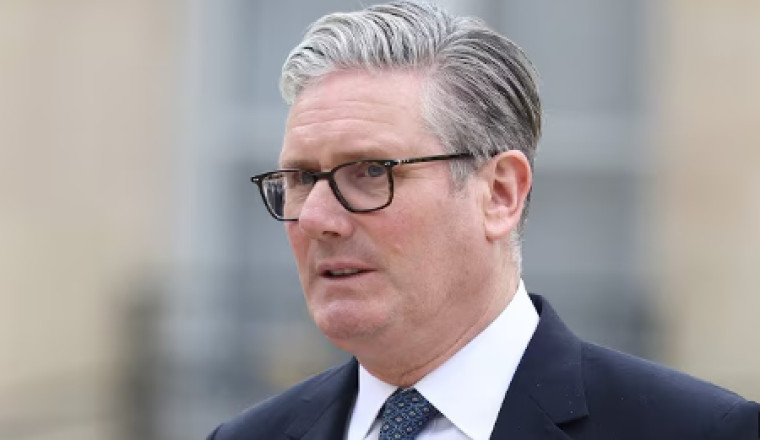
In a recent development, the Prime Minister has indicated that there may be justification for imposing restrictions on certain protests, particularly in light of escalating calls for a suspension of pro-Palestinian demonstrations.
During an interview on BBC Radio 4 on Saturday, Sir Keir Starmer was asked questions regarding the need for more stringent policing of language used in protests, as well as the potential outright cessation of some gatherings. He remarked, “I certainly advocate for tougher policing, and I believe there are circumstances where a ban on specific protests may be warranted.”
While Sir Keir affirmed his commitment to defending the right to protest, he expressed grave concerns about the "cumulative" impact that repeated marches are having on the Jewish community. This comes in the wake of a distressing incident in Golders Green, London, where two Jewish men, Shloime Rand and Moshe Shine, were stabbed.
Essa Suleiman, 45, has since been charged with three counts of attempted murder in connection with this incident, which has been classified as a terror attack by law enforcement. Fortunately, both victims have been discharged from hospital after receiving treatment for serious injuries.
The recent violence targeting Jewish individuals has prompted a broader examination of public order and hate crime legislation. A government-commissioned review, initiated after the tragic deaths of two Jewish individuals outside a Manchester synagogue last year, was expected to yield findings by February, yet it remains unpublished.
Jonathan Hall KC, the government's independent reviewer of terrorism legislation, has recently called for a "moratorium" on pro-Palestinian marches, highlighting the current environment as one where such events inevitably foster antisemitic sentiments. Similarly, Chief Rabbi Sir Ephraim Mirvis has urged for a temporary ban, stating that these protests have contributed to a rising "tone of Jew hatred" across the UK.
In response to inquiries about these calls for action, Sir Keir stated, “I think it’s time to take a comprehensive look at protests and their cumulative effects.” He acknowledged the concerns raised by many within the Jewish community regarding the repeated nature of these demonstrations. “I accept this perspective, which is why we are committed to addressing the cumulative effects,” he added. When pressed on whether certain protests should be halted entirely, Sir Keir noted, “We must explore what additional powers we can implement.”
While acknowledging the deep-rooted and legitimate concerns surrounding the Middle East conflict, he stressed the importance of safeguarding the right to peaceful protest and freedom of speech. Sir Keir stated, “I am not dismissing the strong feelings surrounding Gaza and the Middle East; we all share profound concerns.”
The Stop the War Coalition, a campaign group that has played a significant role in organising many of the marches, condemned all forms of antisemitism and racism but argued that linking the protests to violence against Jewish individuals is misguided. Green Party leader Zack Polanski accused Sir Keir of exploiting the fears of the Jewish community to justify imposing further authoritarian restrictions on peaceful demonstrations. “This would be the worst possible response to the abhorrent attacks in Golders Green and would only serve to deepen divisions when responsible leadership should be fostering unity,” he asserted.
Similarly, Jeremy Corbyn's Your Party cautioned against responses that might infringe upon civil liberties in the wake of such attacks. The Liberal Democrats maintained that protests should only proceed when deemed "safe," with police closely scrutinising each case to ensure they are not hijacked by individuals engaging in antisemitic rhetoric or inciting violence against Jews. Max Wilkinson MP, the party's home affairs spokesperson, emphasised the need for police to be adequately equipped and trained to act swiftly to maintain safety for the Jewish community.
Conservative leader Kemi Badenoch has taken a firmer stance, declaring it "time to ban these marches" to prevent further incidents akin to those witnessed in Golders Green and Manchester. She asserted, “These protests have been exploited as a cover for promoting violence and intimidation against Jews.” Reform UK's home affairs spokesperson Zia Yusuf echoed these sentiments, criticising the Prime Minister's response as "weak" and promising a "zero-tolerance approach" to any protester inciting violence, ensuring that British Jews can live without fear.
Under current legislation, police in England and Wales possess the authority to impose restrictions on protests, such as determining their routes or end times, and can even apply to ban them outright if deemed necessary to prevent "serious public disorder." However, such requests require the home secretary's approval and are not frequently utilised. Notably, in March, the government sanctioned a police request to ban London's Al Quds Day march, marking the first such ban since 2012.
In a related comment, Sir Keir described chants such as "globalise the intifada," a term associated with the Palestinian uprisings, as "very dangerous" to the Jewish community and called for legal action against such expressions. He questioned the motives of individuals participating in protests where such chants are prevalent, asking, “Why am I on a march where this is the chant?”
The term "intifada" gained prominence during the Palestinian uprisings against Israeli occupation in the late 1980s and has been interpreted by Jewish groups as a call for violence against Jews. In contrast, pro-Palestinian advocates argue it signifies a call for peaceful resistance against Israeli actions in occupied territories. Following a recent attack on a Jewish festival in Australia, the Metropolitan Police and Greater Manchester Police announced intentions to arrest individuals using such language in protests or on placards.
The Prime Minister, who faced heckling during a visit to Golders Green, acknowledged the profound anxiety within the Jewish community, stating, “I recognise the depth of feeling, and many Jews are feeling very scared. I am not here to criticise that in any way.”
As the debate surrounding protests and community safety continues, the government faces mounting pressure to navigate the delicate balance between upholding the right to protest and ensuring the safety of all citizens.


Comments
0 comment